


Digital Marketing
How AI Content Generators Are Changing SEO Strategy
Summary
AI content generators are rapidly transforming how SEO content is planned, written, and optimized. They help marketers create content faster, scale efficiently, and align better with search engine requirements. Many businesses today, including those working with the best digital marketing agency in Bangalore, are using AI tools to improve content efficiency without compromising quality or trust. When used correctly, AI tools can strengthen SEO strategy while still delivering value to real users.
Why AI Content Generators Matter for SEO
AI content generators are tools powered by artificial intelligence that can create written content such as blogs, product descriptions, FAQs, and more. For SEO, they matter because search engines increasingly value relevant, structured, and helpful content exactly what modern AI tools are designed to produce when guided properly. As search algorithms evolve, AI-generated content is becoming a strategic advantage for any digital marketing agency focused on scalable and sustainable growth.
What Are AI Content Generators?
AI content generators are software tools that use machine learning and natural language processing (NLP) to create human-like text. Popular AI writing tools can:
- Generate blog posts, articles, and landing pages
- Suggest keywords and headings
- Rewrite or optimize existing SEO content
- Answer user questions in a conversational way
These tools analyze massive amounts of data to understand language patterns, search intent, and content structure, making them especially useful for SEO-focused writing in modern digital marketing strategies.
How AI Content Generators Are Changing Traditional SEO Strategy
Traditional SEO relied heavily on manual research, writing, and optimization. AI is reshaping this process in several key ways:
1. Faster Content Creation
AI can produce draft content in minutes instead of hours or days. This allows marketers to publish more frequently and respond quickly to search trends.
2. Better Alignment With Search Intent
Modern AI tools can analyze search intent (informational, transactional, navigational) and generate content that directly answers user queries, improving relevance and rankings.
3. Data-Driven Optimization
AI tools often integrate keyword data, competitor analysis, and SERP insights, helping content creators make smarter SEO decisions from the start.
4. Scalable SEO Content
AI makes it possible to scale SEO content across multiple pages, locations, or categories without sacrificing structure or consistency.
Benefits of AI Content for SEO
Using AI Content Generators as part of an SEO strategy offers several advantages:
Speed and Efficiency
- Generate long-form SEO content quickly
- Reduce time spent on repetitive writing tasks
Scalability
- Create content for blogs, category pages, and FAQs at scale
- Useful for large websites and eCommerce platforms
Keyword Optimization
- Natural placement of primary and related keywords
- Helps avoid keyword stuffing while maintaining relevance
Consistent Structure
- Clear headings (H1, H2, H3)
- SEO-friendly formatting that search engines prefer
Cost-Effective
- Reduces dependency on large content teams
- Improves ROI for content marketing efforts
Challenges and Limitations of AI-Generated Content
Despite the benefits, AI-generated content is not without risks:
Lack of Original Insight
AI relies on existing data and may not provide unique perspectives or firsthand experience.
Risk of Low-Quality Content
Without proper prompts and human review, AI content can sound generic or repetitive.
E-E-A-T Concerns
Google emphasizes Experience, Expertise, Authoritativeness, and Trustworthiness (EEAT). AI alone cannot demonstrate real-world experience.
Over-Reliance on Automation
Relying only on AI may lead to content that lacks brand voice or emotional connection.
Best Practices for Using AI Content Generators Without Harming SEO
To use AI content generators effectively and safely, follow these best practices:
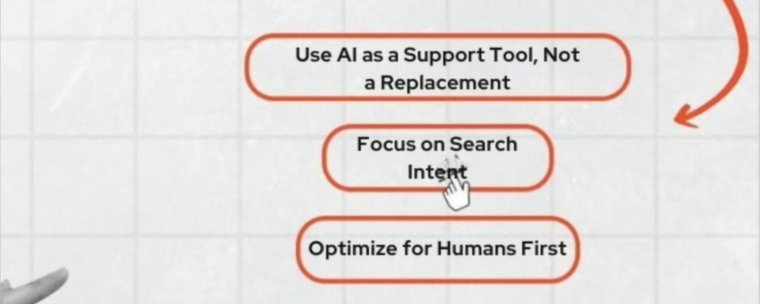
Use AI as a Support Tool, Not a Replacement
AI should assist human writers, not replace them. Always add human insights, examples, and expertise.
Optimize for Humans First
Write content that solves real user problems. Search rankings follow user satisfaction.
Review and Edit Every Output
Check for:
- Accuracy
- Tone and clarity
- Brand alignment
Focus on Search Intent
Use AI to structure content around user questions, not just keywords.
Combine AI With SEO Strategy
Pair AI-generated content with:
- Proper internal linking
- On-page SEO optimization
- Technical SEO best practices
The Future of AI Content Generators and SEO Strategy
AI Content Generators and SEO Strategy will continue to evolve together. Search engines are becoming better at detecting helpful, high-quality content regardless of whether it’s written by humans or AI. The key factor will always be value to the user.
Brands that combine AI efficiency with human creativity and SEO expertise will have a strong competitive advantage in search rankings.
Conclusion
AI content generators are not a threat to SEO, they are a powerful evolution of it. When used responsibly, they can improve efficiency, scalability, and search rankings while still delivering meaningful value to users.
Frequently Asked Questions (FAQ)
1. Are AI-generated articles good for SEO?
Yes, AI-generated articles can perform well in SEO if they are accurate, helpful, well-structured, and reviewed by humans before publishing.
2. Does Google penalize AI-generated content?
Google does not penalize content simply for being AI-generated. It focuses on content quality, relevance, and usefulness.
3. Can AI content generators replace SEO writers?
No, AI tools support SEO writers by improving speed and structure, but human expertise is still essential for originality and trust.
4. How do AI writing tools help with keyword optimization?
AI writing tools naturally integrate primary and related keywords based on context, reducing the risk of keyword stuffing.
5. What is the best way to use AI for SEO content?
Use AI for research, drafting, and optimization, then refine the content with human editing and strategic SEO planning.