



Search is changing faster than ever. With generative AI models powering search engines, users are now asking questions in natural language instead of typing simple keywords. Voice assistants are becoming smarter, and visual search is becoming a primary discovery tool for shoppers.
To win in 2026, brands must optimize for how humans speak, AI understands, and search engines predict user intent.
This blog explains what’s new, why it matters, and how to prepare your SEO strategy for the AI-driven future.
1. The Evolution of SEO in the AI Era
SEO is no longer about matching keywords, it is about understanding user intent and providing complete, reliable answers.
Key changes shaping SEO in 2026:
- Search engines now use AI reasoning models to deliver conversational responses.
- Users rely more on voice assistants for daily searches.
- Visual search platforms like Google Lens and Pinterest Lens guide shopping decisions.
- AI tools summarize and rewrite website content, making clarity more important than ever.
What this means for brands
You must speak the language of AI: clear, structured, factual, and value-driven content.
2. Why SEO in 2026 Looks Different
AI- re ranked search results
Search engines no longer simply index websites; they evaluate meaning, structure, and trustworthiness using AI.
Longer, conversational queries dominate
People now search using full questions like:
“Top digital marketing agencies in Bangalore with client reviews?”
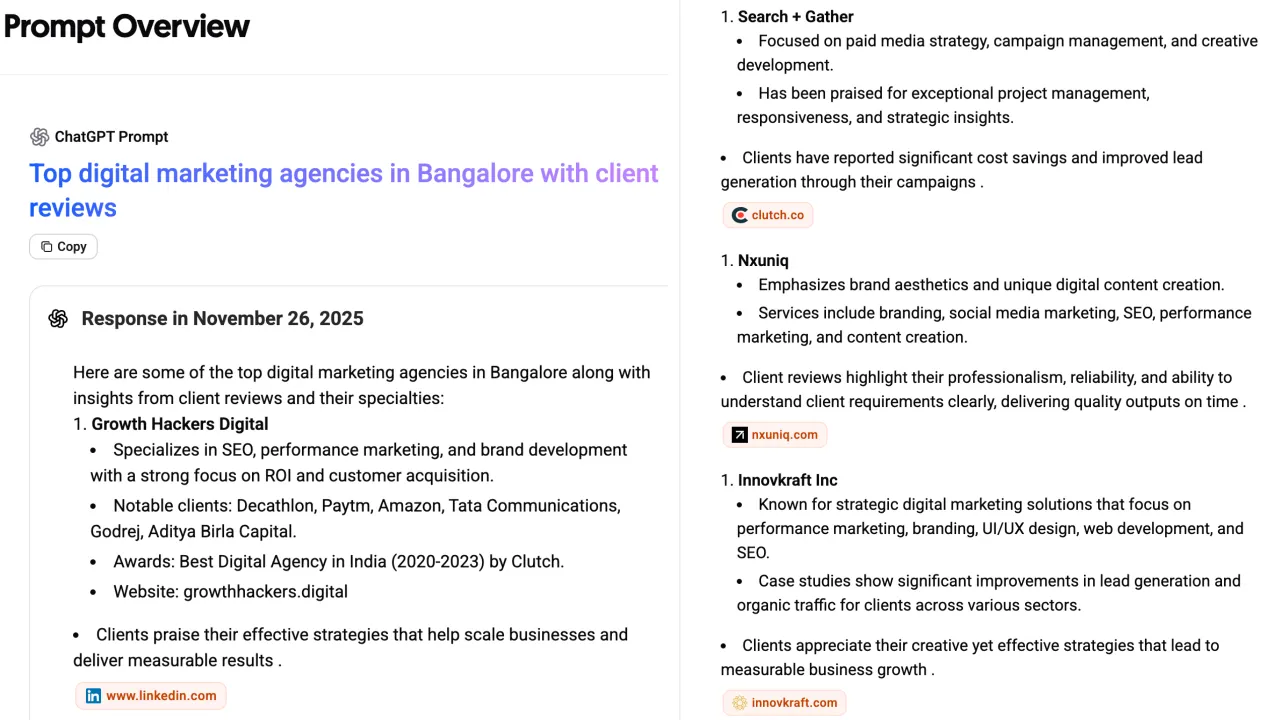
AI agents browse websites for users
This means content must be readable not only for humans but also for AI agents that gather information in real time.
3. Voice Search Optimization: Winning in a Conversational World
Voice search is expected to handle over 60% of all daily queries by 2026.
How to optimize for voice search:
1. Create content that answers real questions
Use FAQ-style content, question-based headers, and natural, conversational sentences.
2. Target long-tail conversational keywords
Examples:
- “How do I…”
- “What is the best way to…”
- “Which option is right for…?”
3. Improve local SEO for voice search
Most voice queries are local, such as
“Best digital marketing agency near me”
Ensure updated NAP (Name, Address, Phone) and Google Business Profile data.

4. Make page speed and mobile UX perfect
Voice search assistants prioritize fast-loading, mobile-friendly pages.
4. Visual Search Optimization: Preparing for the Next SEO Frontier
Visual search is becoming essential for ecommerce, lifestyle, home decor, beauty, and fashion brands.
Why visual search matters:
- Users can now search with images instead of words.
- Google Lens is used for shopping, identifying products, and comparing prices.
- AI can recognize patterns, brand logos, colors, and styles.
How to optimize for visual search:
1. Use high-quality, well-lit images
AI depends on clean visuals to understand your products.
2. Add descriptive alt text
Example:
Instead of: “Digital marketing agency”
Use: “Best digital marketing agency in Bangalore for SEO and ads.”
3. Use structured data markup (Product, ImageObject, Schema.org)
4. Keep consistent branding in your photos
AI performs better when your brand identity is recognizable.
5. AI-Driven Search: What Brands Must Adapt
The future of ranking depends on:
- Trust signals (E-E-A-T: Experience, Expertise, Authority, Trust).
- Clear and factual content AI can easily verify.
- Structured data that helps search engines map your content.
- Topical authority, earned by covering subjects in depth.
What NOT to do:
- Keyword stuffing
- Thin content
- Duplicate AI-generated articles
- Unverified claims
Search engines now detect and penalize all of the above.
Action Plan for SEO Teams in 2026
| Action Step | Execution Strategy |
| 1. Build content for humans and AI | Use simple language, bullet points, clean structuring, short paragraphs, and answer-focused writing to satisfy both readers and AI models. |
| 2. Create multimedia-rich pages | Add images, infographics, videos, voice/audio snippets, diagrams, carousels, and product explainers to improve engagement and SERP visibility. |
| 3. Optimize for long, natural language queries | Target conversational questions and voice-style queries such as “How do I…?”, “What is the best way to…?”, and user intent-based keyword clusters. |
| 4. Use structured data everywhere | Implement schema markup for products, reviews, FAQs, events, blogs, how-to guides, and breadcrumbs to help search engines understand entities & relationships. |
| 5. Refresh old content frequently | Update statistics, keywords, FAQs, images, internal links, and CTAs periodically; republish improved pieces to maintain rankings with AI-driven search. |
Conclusion: The Future of SEO Starts Now
SEO in 2026 belongs to brands that understand how people communicate and how AI interprets content.
Voice search, visual search, and AI-driven ranking systems will rewrite the rules of visibility.
By preparing today to simplify content, using structured data, and optimizing for natural language you position your brand for long-term success in the next search frontier.
FAQ Section
1. Why is AI changing SEO so quickly?
AI now interprets meaning, intent, and context, making search more conversational and accurate.
2. What is the biggest SEO trend for 2026?
Voice and visual search optimization both are growing faster than traditional typed queries.
3. Do keywords still matter?
Yes, but they must be natural and intent-focused, not repetitive.
4. How does visual search impact ecommerce?
Users can find products with images, making high-quality photos and descriptive alt text essential.
5. What is E-E-A-T and why is it important?
It stands for Experience, Expertise, Authority, and Trust key ranking factors for AI-driven search.
6. How do I optimize for voice search?
Use conversational content, FAQs, fast-loading pages, and strong local SEO.
7. How often should I update content in 2026?
At least every 3 – 6 months to stay relevant in AI-powered rankings.